Swedish and deep tissue are the two names most people see first on a massage menu in Concord, and they are often described as light versus hard. That shorthand misleads. The real difference is purpose and technique, and the right choice depends on what you want to change by the time you leave.
Swedish work uses long, flowing strokes, kneading, and gentle movement to calm the nervous system and ease general tension. Deep tissue work slows down, uses firmer pressure through forearms and elbows, and stays on specific layers of muscle and connective tissue. Both can be part of the same session.

What Swedish massage does best
Choose Swedish when stress is the main problem: poor sleep, a racing mind, shallow breathing, and an overall sense of being wound tight after a long week. The steady rhythm helps circulation and gives tight muscles a chance to let go without being challenged. It is also the usual starting point for someone new to massage, someone sensitive to pressure, or someone recovering from a draining few weeks rather than a specific injury.
In a Piedmont summer, when heat and humidity already leave people tired, a lighter session can feel restorative without adding soreness the next day. Athletes sometimes use Swedish work on rest days for the same reason. The goal is downshifting, not fixing one knot.
What deep tissue does best
Choose deep tissue when you can point to the problem. A knot under the shoulder blade that returns every workday, a low back that locks up after yard work on red clay, calves that stay tight from running, or a neck that will not turn fully. The therapist works slowly into the tissue, finds trigger points, and holds or strips through them so the muscle can release.
This work is not about maximum pressure for the whole hour. Too much force makes the body guard against it. Skilled deep work builds gradually, checks in, and spends time where it matters instead of spreading the same hard pressure everywhere.
| Question | Swedish tends to fit | Deep tissue tends to fit |
|---|---|---|
| Main goal | Relaxation and general tension | A specific painful or tight area |
| Pace | Flowing and continuous | Slow and focused |
| Pressure | Light to medium | Medium to firm, adjusted often |
| Next day | Usually no soreness | Mild soreness is possible |
| Good first session | Yes, for most people | Yes, if the area and pressure are discussed |
You can mix the two
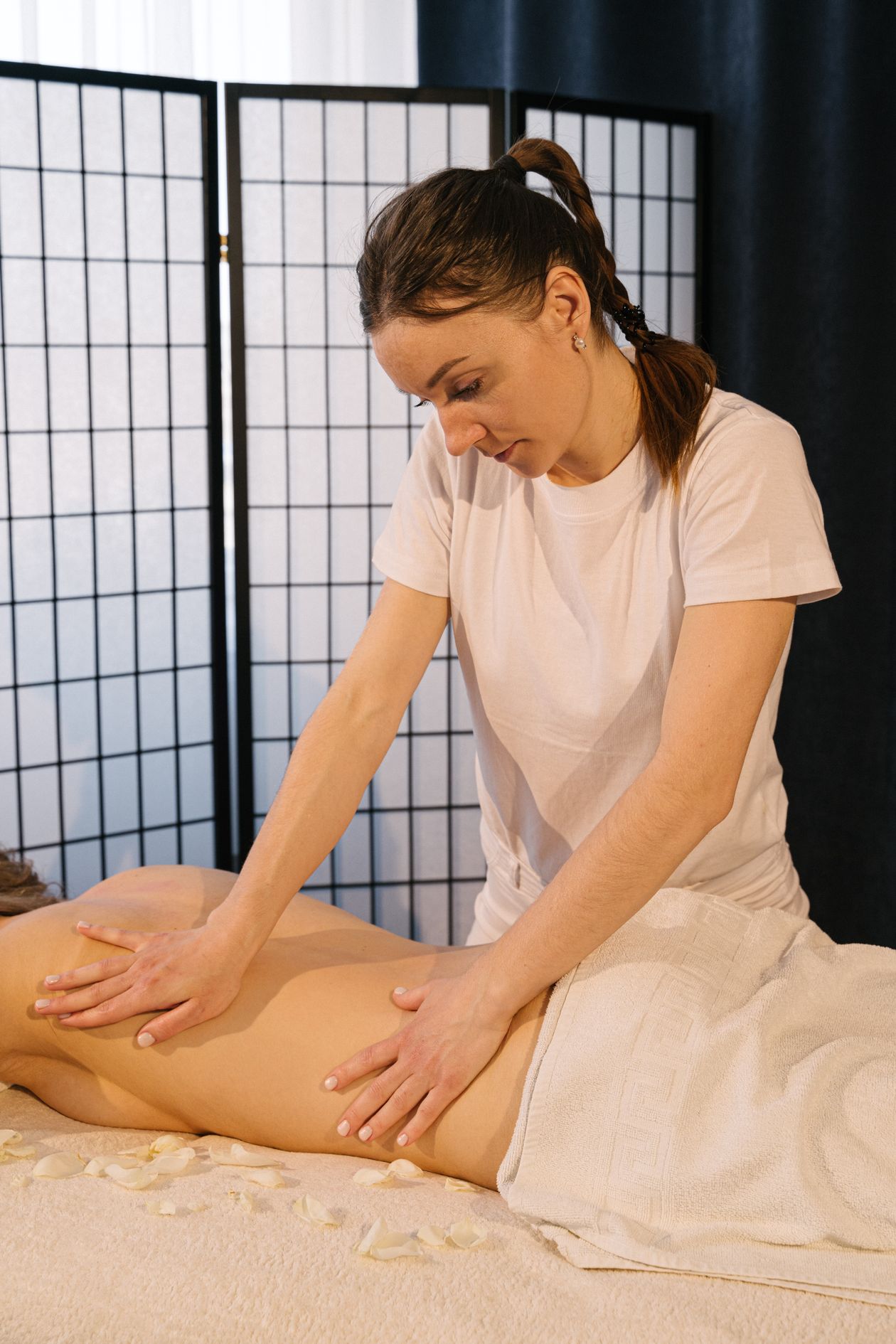
Most real sessions are a blend. A therapist might start with Swedish strokes to warm tissue and calm breathing, move into deep work on the back and hips where you carry tension, then finish with lighter work on the neck. Tell the therapist your main goal in one sentence at the start, for example, help my low back and let me relax. That gives the session a clear order.
Common mistakes when choosing
One mistake is booking deep tissue because you assume lighter work will not accomplish anything, then spending the hour bracing against pressure that is too much. Another is booking only relaxation work for months while a specific mechanical problem, such as a hip that never loosens, goes unaddressed. Neither style is better in general. Each is better for a job.
Pressure tolerance also changes. Stress, lack of sleep, illness, and a hard workout the day before can all make the same pressure feel stronger. A choice that worked last month in Concord may not be the right call today, and saying so is part of getting good care.
A simple way to decide
If you want to leave calmer, choose Swedish. If you want to leave moving differently in one area, choose deep tissue and name that area. If you want both, say which one matters more if time runs short. That priority helps the therapist pace the hour instead of guessing.
Talk about pressure in numbers
A practical trick is to agree on a scale before the work starts. Ask the therapist to check in using a one-to-ten scale, where five feels firm and useful and eight is your hard limit. That shared language is faster than trying to describe soreness mid-session, and it helps the therapist return to the right depth after moving to a new area. Shoulders, calves, and low back rarely share the same number. Revisit the scale on a later visit too, because a body that was tense and guarded at a first Concord appointment often accepts deeper work more comfortably once trust and familiarity are established.
Common questions
Is deep tissue supposed to be painful?
No. It can feel intense, but pain that makes you tense up works against the goal. Ask for less pressure or a slower approach whenever you need it.
Can I get Swedish and deep tissue in one session?
Yes. Many sessions blend flowing relaxation strokes with focused deep work on one or two areas. State your priority at the start.
Which style is better for stress?
Swedish is usually the better fit when stress, poor sleep, and general tension are the main issues rather than one specific sore spot.
Photos in this guide are representative stock images.
← All guides from HandsInMotion Massage Therapy← Back to HandsInMotion Massage Therapy