Hot stone and cupping sound very different from ordinary massage, and the menu descriptions are often too short to explain either one. In Concord sessions, both are tools a therapist uses to change how tissue responds. Stones add sustained heat. Cups add lift. Neither replaces skilled hand work, and both should be explained before they touch you.
Understanding what each tool does helps you decide if you want it, and helps you give useful feedback while it is happening instead of quietly wondering if the sensation is normal.
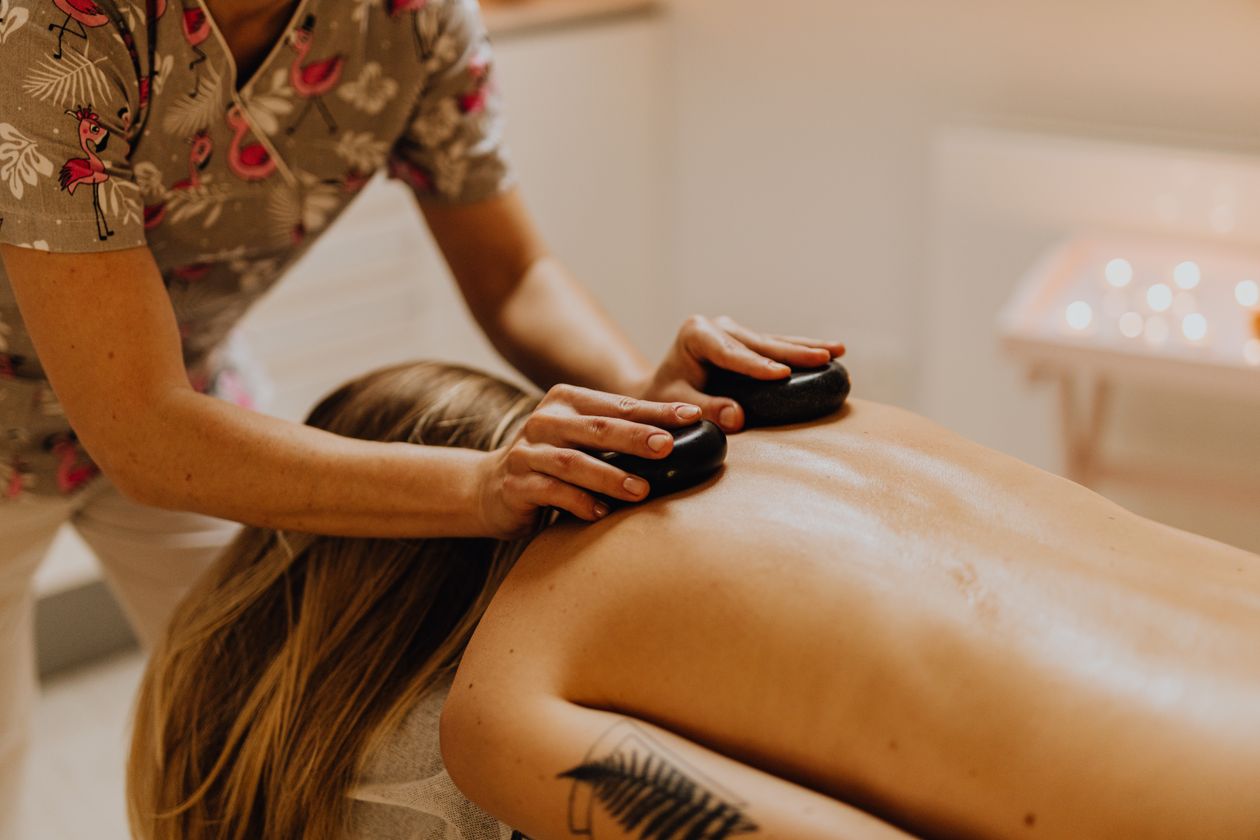
Hot stone massage, in plain terms
Smooth stones, usually basalt because it holds heat well, are warmed in water, checked for temperature, and placed on or moved across the body. A therapist may rest stones along the back while working elsewhere, then use a stone in hand to stroke and press into warmed muscle. Heat encourages tight areas to relax and can make deeper work feel easier to receive.
Stones should feel warm and comforting, never like they are burning or too hot to tolerate. Say the word hot the moment one feels wrong, and it should be removed at once. People with reduced sensation, certain circulatory problems, or heat sensitivity should discuss stone work before booking, because they may not feel an unsafe temperature as quickly.
Cupping and vacuum therapy, in plain terms
Cupping places cups on the skin and creates suction, lifting tissue upward instead of compressing it downward like hands do. ACE Medicupping vacuum therapy uses a machine to control that suction and move the cups in a steady rhythm. The aim is to help tight, stuck-feeling tissue move more freely and to support local circulation.
Cups can leave round marks that fade over several days. That is common and should be explained beforehand so you can plan around a beach day, photos, or a sleeveless dress. Suction should feel like a strong pull, not sharp pain. Ask for less vacuum or a moving technique if a stationary cup feels too intense.
Who tends to like each one
People who carry broad, general tension and feel they never fully warm up or let go often like stones, especially in winter or in an air-conditioned room that leaves muscles feeling guarded. People with a specific tight band, old scar tissue area, or a spot that does not respond to pressure alone are often curious about cupping, because lift reaches tissue differently than compression.
Neither is automatically stronger or better. Some clients love the marks-free, sleepy warmth of stones and dislike suction. Others find cupping gives the clearest change in a stubborn shoulder. Trying one tool in part of a session, rather than the whole hour, is a sensible first step.
Questions to ask before you book
Ask how the tool will be used on you, how long it will stay in one place, what marks or soreness to expect, and what conditions would rule it out. Mention diabetes, blood thinners, varicose veins, recent surgery, skin irritation, or pregnancy, because those details can change the plan. A therapist who answers plainly and adjusts without argument is giving you the information you need.
After a first session with a new tool, judge it over two days. How did you sleep, move, and feel at the spot that bothered you? That record matters more than how dramatic the tool felt on the table.
How a combined session is usually paced
When stones or cups are part of a Concord session, the therapist still begins with hands to assess tension and warm the tissue. The tool is then introduced on one area while hand work continues elsewhere, so no part of the hour feels like waiting for equipment. Near the end, most therapists return to plain hand work to finish and recheck how the area moves. Tell them afterward which part you would repeat and which you would skip. That preference should be noted for your next visit, because the best use of a tool is personal: the combination that changed your shoulder may do nothing special for your low back.
Common questions
Do cupping marks hurt?
The marks themselves usually do not hurt, though the area can feel tender that day. They commonly fade over several days and should be discussed before the session.
Can hot stones burn you?
They should be temperature-checked and feel comfortably warm. Speak up immediately if one feels too hot so it can be removed.
Should I try stones or cupping first?
If you want broad relaxation, start with stones. If one tight area has not responded to hand work, ask about cupping for part of the session.
Photos in this guide are representative stock images.
← All guides from HandsInMotion Massage Therapy← Back to HandsInMotion Massage Therapy